Comply with the regulations effortlessly, automate your processes and take your invoicing to the next level with Quipu.
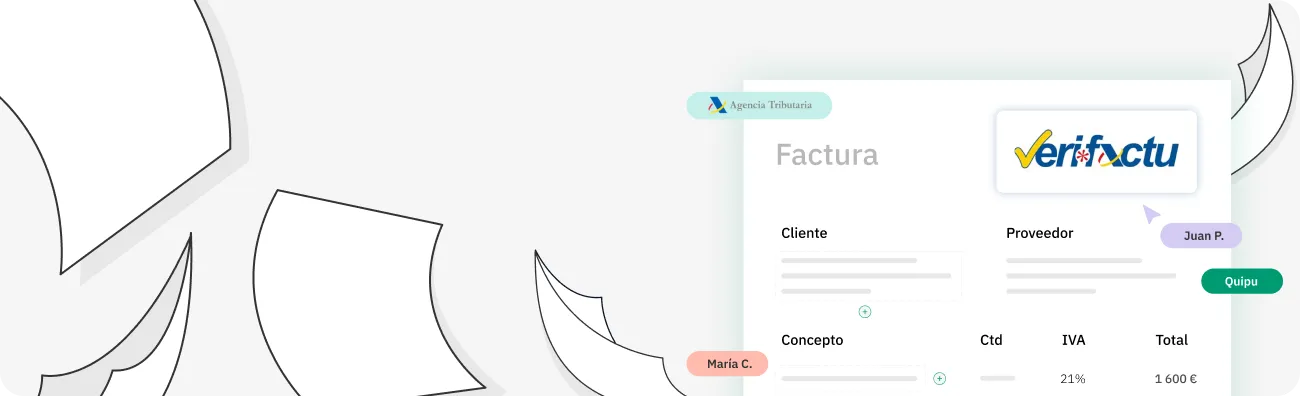
Quipu will be ready for Verifactu, allowing you to issue verified electronic invoices connected to the Tax Agency. This system ensures regulatory compliance, transparency and simplified accounting.
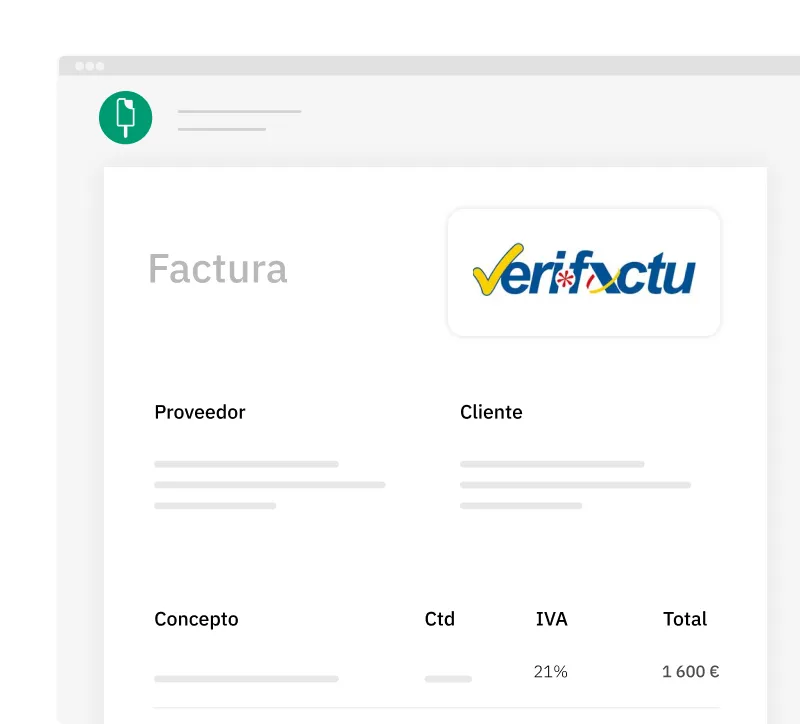
With Quipu, you'll be able to create drafts, easily validate them with the Tax Agency and obtain electronic invoices with a QR code and a unique identifier.
Start invoicing electronically today — simple and 100% compliant with regulations
Free TrialUnlimited invoicing
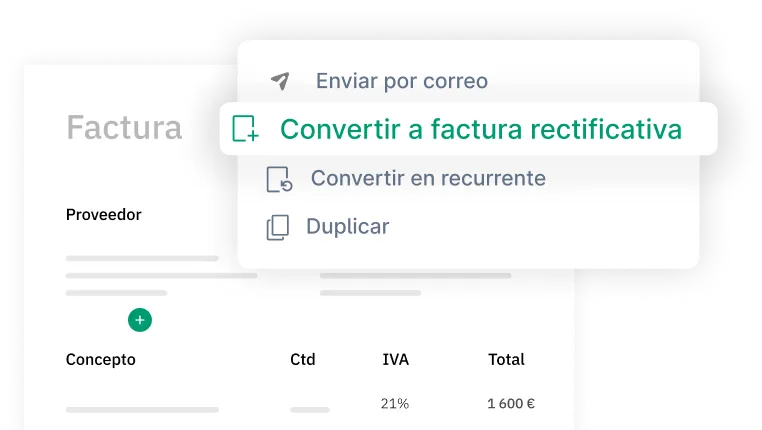
Easily create all kinds of invoices, receipts, quotes and delivery notes.
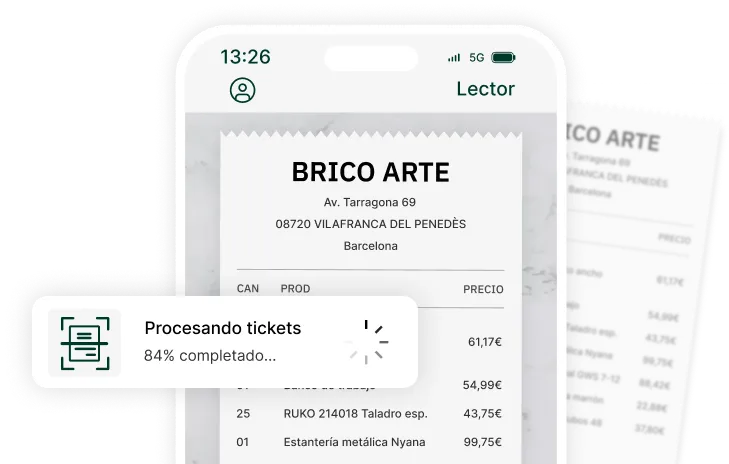
Cut the time spent managing and recording your expenses by up to 95%.
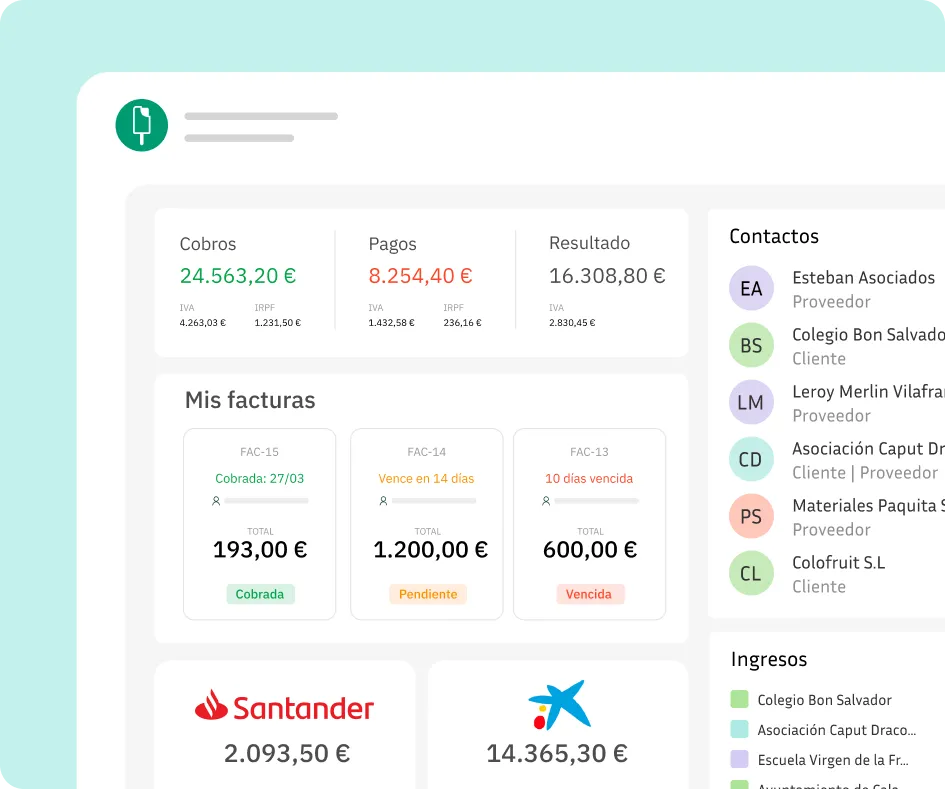
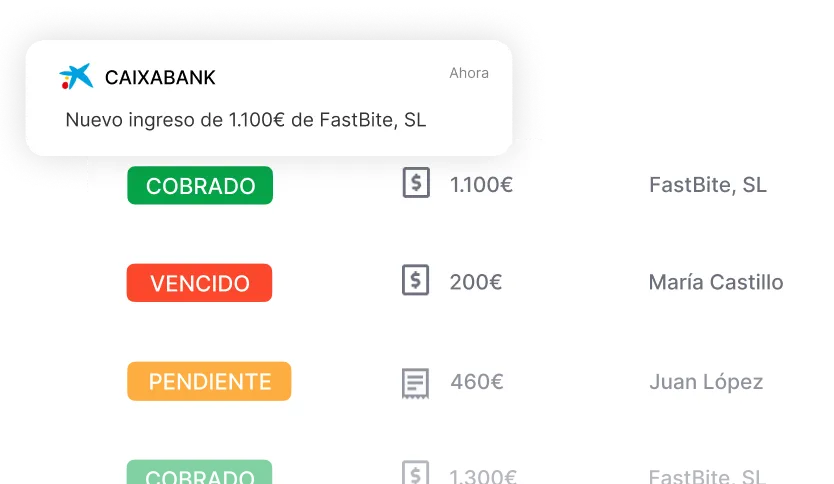
Connect your banks and update the status of your documents by reconciling them automatically.
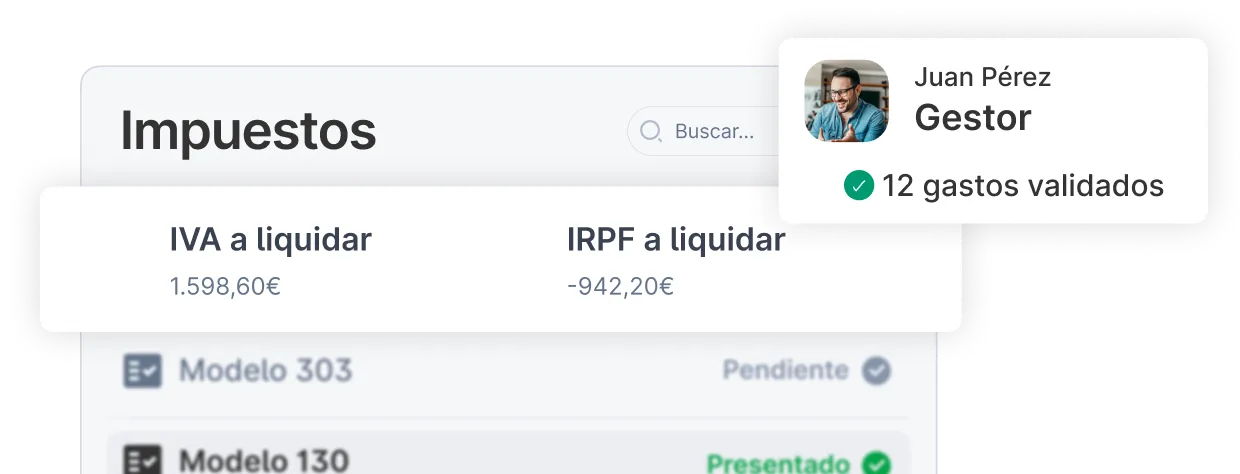
Get better control over what you'll pay in taxes by using our software alongside your advisor.
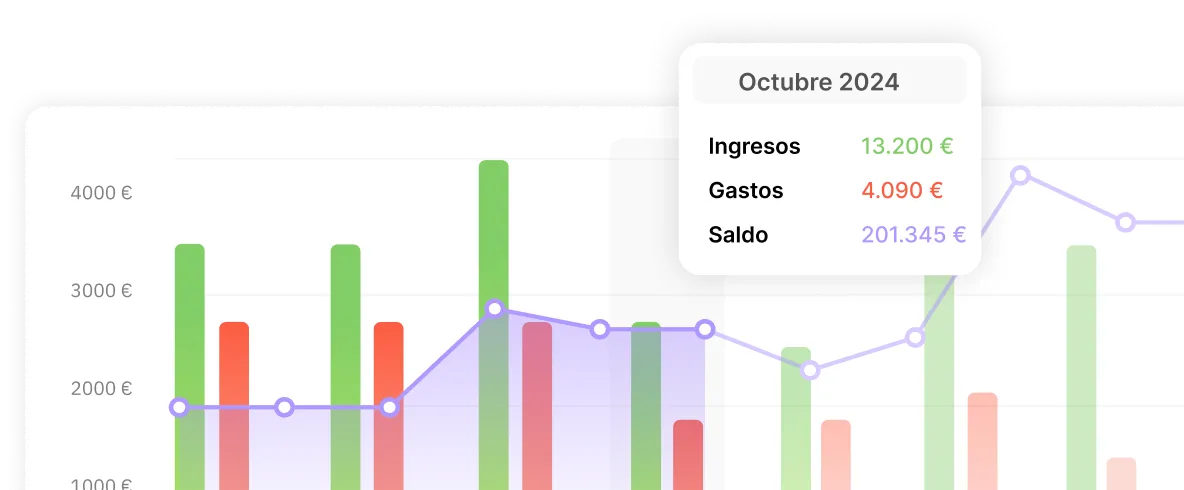
Track your cash flow in real time, build reliable forecasts and make the right decisions.
Don't miss the latest updates on electronic invoicing!
Stay up to date and keep track of everything you need to know about the new invoicing regulations.
Subscribe and get access to:
Penalties for failing to adapt to electronic invoicing can include warnings or fines of up to 10,000 euros. In addition, companies that don't comply with this requirement could face restrictions on access to grants and public aid.
Electronic invoices must be created using private electronic invoicing platforms that meet the legal requirements, such as the one we offer at Quipu, or the public electronic invoicing solution provided by the Tax Agency.
What requirements must private software meet?
1) Invoice record generation: for each delivery of goods or provision of services, the software must generate an invoice record simultaneously with or immediately before issuing the invoice.
2) Transmitting information to the Tax Administration: the system must be able to send information to the Tax Administration in a continuous, secure, complete, automatic and reliable way.
3) Guaranteed integrity and immutability: the software must protect invoice records against any alteration that could compromise their accuracy and authenticity.
4) Ban on features to alter data: the software must not allow, whether on-site or remotely, altering or hiding the original recorded data.
5) Chaining of records: invoice records must be chained together so that their creation sequence can be verified from the first to the last.
6) Event logging: the software must automatically log all relevant interactions, operations and events, such as errors, user logins and logouts, and system installation and updates.
7) Separation of tax and non-tax information: the system must allow the Tax Administration to access tax information without compromising confidential non-financial information.
No, you won't be able to keep invoicing with Excel. With the Crea y Crece Law and the Anti-Fraud Law coming into force, it will be mandatory to issue electronic invoices through certified software that guarantees the integrity, authenticity and traceability of invoices.
If you'd like to learn more about this topic, we recommend reading this article.
Getting ahead with electronic invoicing before it becomes mandatory can be beneficial because it saves time by automating the generation and sending of invoices, makes it easier to meet the demands of large clients who already require electronic invoicing, and prepares your company so you don't have to turn down projects or tenders for not being adapted.
It also improves efficiency by streamlining document exchange and cutting costs, and it ensures regulatory compliance, avoiding future penalties for failing to meet legal obligations.
Although the law was passed in September 2022, the implementing regulation has yet to be published, so a definitive date can't be set.
Once it's approved, companies with turnover exceeding 8 million euros will have one year to meet the requirements. Meanwhile, small businesses and the self-employed will have a two-year window to adapt.
When the law comes into force and the implementation period ends, you'll be required to:
- Generate and manage invoices in a standardized electronic format.
- Report on the status of each invoice issued.
To meet these requirements, you'll need certified software that makes it easy to issue electronic invoices, along with a connected invoicing platform. Since these changes will affect the way you operate internally, we recommend getting familiar with the new regulations and adjusting your processes as soon as possible. How does this option sound to you?
The Anti-Fraud Law Regulation aims to combat tax fraud and encourage voluntary compliance with tax obligations. This regulation primarily governs internal management processes and the software used for invoicing and accounting.
Among its key provisions, it prohibits the use of invoicing software that allows accounting data to be manipulated or hidden. It also requires the use of technological solutions that guarantee the integrity and traceability of invoices, as well as the ability to send records directly to the Tax Agency (AEAT).
All businesses and self-employed professionals are required to use certified invoicing software that prevents the manipulation of invoices and receipts. However, the regulation includes some exceptions. It won't apply to those already subject to the Immediate Supply of Information (SII), nor to certain cases within the agriculture, livestock and fishing regime, or to specific transactions that are exempt from the invoicing obligation.
When the regulation comes into force, you'll need to have invoicing software certified by the Tax Agency. This software must generate invoices with a QR code, ensure their traceability and be able to report data to the AEAT through the VeriFactu system. Given the significant changes this process will bring to both your daily operations and your accounting management, we recommend starting to prepare well in advance.
The VERIFACTU system is an optional measure developed by the Tax Authorities so that the invoicing programs of self-employed professionals and businesses automatically send their invoicing records to the Tax Agency in real time. This system streamlines tax control and increases the transparency of business transactions.
Electronic invoices verified through VERIFACTU will include the wording "VERI*FACTU", indicating that they have been automatically registered and sent to the Tax Authorities.
If you'd like to learn more about this topic, we recommend reading this article.
Yes, invoices will need to include a QR code. This obligation is set out in Royal Decree 1007/2023, which establishes that invoicing programs must integrate a QR code into all issued invoices, both paper and electronic.
The QR code ensures the authenticity and integrity of the invoice, allows the customer to scan and save the invoice information, and makes it easier for the Tax Agency to verify it.
If you'd like to learn more about this topic, we recommend reading this article.
Verifactu, Ticket BAI and the SII are electronic invoicing systems in Spain that operate in parallel and for different purposes.
1) The SII, implemented by the Tax Agency, enables near real-time VAT reporting.
2) Verifactu is an invoice certification system that, although not yet approved, will add a layer of security by verifying that invoices meet legal requirements.
3) Ticket BAI, on the other hand, is a regional system in the Basque Country designed to control invoicing and ensure tax transparency.
Although they serve different purposes, businesses in the Basque Country will need to comply with Ticket BAI while also reporting to the SII and eventually integrating Verifactu.
Easily ask our agents through our interactive chat.

Get the most out of all the solutions Quipu offers to grow your business.

Get detailed answers to frequently asked questions about the platform.
No commitment, no hassle, and with total flexibility.